
BETTER DECISIONS THROUGH BETTER DECISION-MAKING SYSTEMS
The benefits of stronger decision papers include:
1. Faster decision‑making at executive and board level
When decision papers are clearly structured and get straight to the point, decision‑makers are able to reach conclusions much more quickly.
2. Higher quality decisions
Clear data, well‑defined consequences, and recommendations that are easy to understand significantly reduce the risk of poor decisions.
3. Less time spent on back‑and‑forth communication
Well‑designed decision papers result in fewer follow‑up emails, fewer additional meetings, and far less wasted time.
4. Greater transparency for all involved
When arguments, alternatives, and risks are clearly articulated, it becomes easier to understand the logic behind decisions.
5. Stronger organisational alignment
Clear decision papers create shared direction by communicating priorities and rationales consistently across the organisation.
6. Greater decision‑maker confidence—and more approvals
Clear recommendations and solid argumentation give executives and boards the confidence to approve strategic initiatives.
7. Better use of data and evidence
Research‑based tools for decision‑making and argumentation significantly improve the quality of decision papers.
8. More effective employees and case handlers
When people know how to structure strong decision papers, quality improves across teams and functions.
9. Consistent standards across formats
Whether the document is a memo, a PowerPoint presentation, or a written recommendation, messages become clearer and easier to approve.
10. Capability development that impacts the bottom line
Better decisions lead to fewer detours, faster implementation, and stronger organisational momentum.
We work on several levels:
Developing decision‑ready communication: Training employees to create clear notes, proposals, and presentations that support decision‑making. The focus is on making content sharper and more effective—while also reducing preparation time. Too often, valuable working hours are spent writing lengthy sections that are never read; this approach helps eliminate that waste.
Strengthening the organisational decision flow: Working with the organisation’s decision processes and advising key gatekeepers on how to provide constructive feedback, assess proposals, and support efficient decision‑making. The goal is to improve flow and consistency—rather than repeatedly reshaping presentations until they lose clarity and intent.
Aligning expectations with decision‑makers: Clarifying what decision‑makers—most often boards or executive leadership teams—expect from decision‑making presentations. In many organisations, these expectations are unclear or differ from one individual to another. Establishing shared principles reduces uncertainty, frustration, and rework.

In a short time, I have gained a completely new understanding of what it means to involve and activate those around me, thereby creating motivation and ownership in the organisation. I use the new tools I have been given daily, and I have no doubt about the effect.
Lars Braun Nielsen,
Chief Executive Officer, LBN MEDICAL A/S
For example, we have helped:
A financial services company that needed to report IT risks to the board in a way that provided a clear overview, was efficient for the organisation to prepare, and made it easy to balance high‑level insight with access to necessary detail.
A public sector organisation that wanted stronger decision‑making processes, templates, and texts—ranging from specialist‑level notes and recommendations through to department management and executive leadership. The result was clearer, more consistent decision material across all levels.
A trade union organisation that equipped its politically elected representatives with well‑structured presentations and solid knowledge foundations. This ensured informed decision‑making while preserving political autonomy. As a positive side effect, the organisation significantly increased its professionalism across workflows.

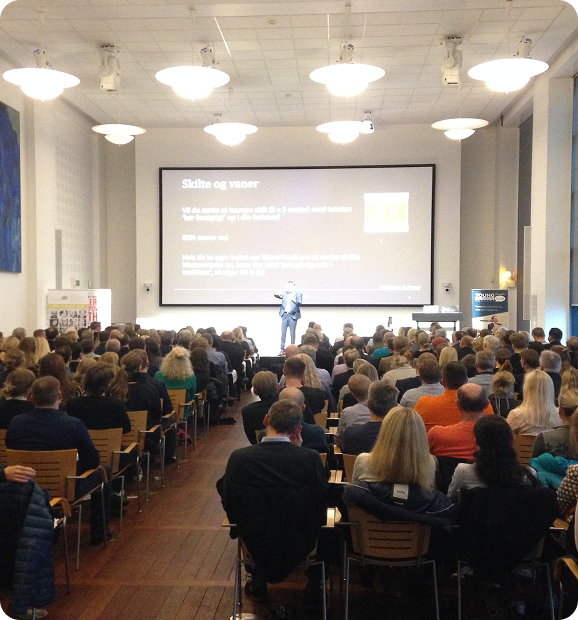
Our speciality lies in strategic capability‑building programmes that strengthen how organisations make decisions. We design initiatives that sit at the intersection of decision‑making, leadership communication, and organisational competence—ensuring that decision papers, recommendations, and briefings support clearer judgment, faster approvals, and better outcomes.
Over the years, we have delivered hundreds of tailored programmes and designed a wide range of strategic competence initiatives for both Danish and international organisations. Our approach is firmly grounded in research‑based tools and brought to life through practical exercises, real cases, and concrete examples. We believe that developing decision‑making capability should be both rigorous and engaging—challenging participants while remaining highly relevant to their everyday work.
Stronger decision papers lead to sharper decisions, clearer priorities, and more effective use of time and organisational resources. All of this is achieved through research‑based methods and a clear focus on practice.
Contact us at Rhetorica, and let’s work together to strategically strengthen your organisation’s decision‑making capability.
We guarantee:
- We provide research‑based tools and train the organisation in using them effectively in practice.
- We stay engaged and work closely with you until the approach works and real improvements can be seen across the organisation.
- Even though our work is firmly research‑based, it involves surprisingly few dry textbooks and dusty compendiums—and plenty of energy, engagement, and good humour. Because learning should be professionally rigorous, while also being motivating, enjoyable, and human.